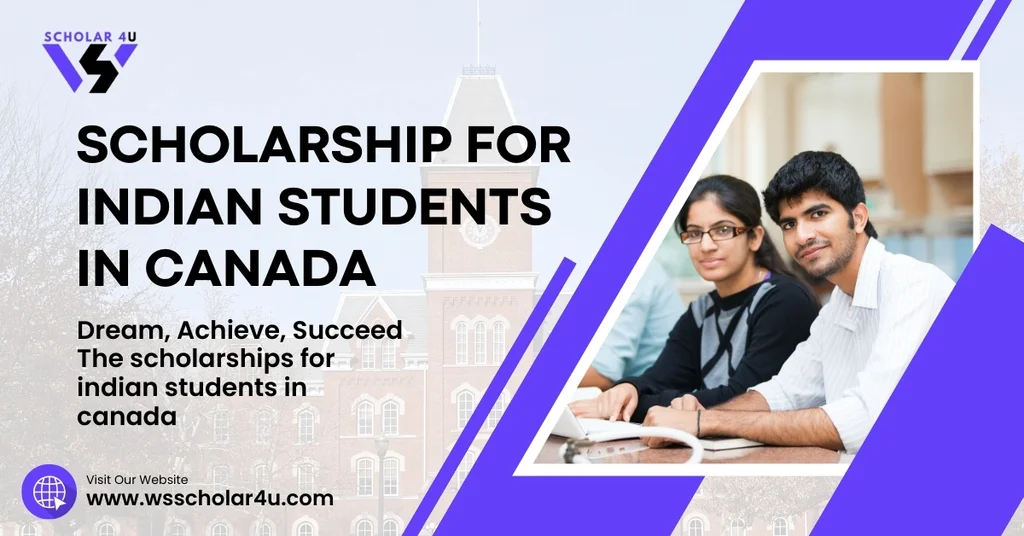
The journey toward an international education is often paved with academic ambition and the search for financial sustainability. For Indian students, Canada has solidified its position as a top-tier destination in 2026, offering a blend of world-class research facilities and a welcoming multicultural environment. While the cost of studying abroad can be a significant hurdle, the diverse landscape of scholarships—ranging from full-ride government awards to niche institutional grants—acts as a vital bridge, making the dream of a Canadian degree a tangible reality.
Securing a scholarship for Indian students in Canada requires a strategic approach that balances stellar academic credentials with a compelling personal narrative. In 2026, the selection criteria have evolved to place a higher premium on leadership, community engagement, and specific research alignment with Canadian priorities. Whether you are aiming for prestigious doctoral fellowships or undergraduate entrance awards, understanding the nuances of the application timeline and the documentation required is the first step toward unlocking life-changing financial assistance.
Beyond mere financial relief, these scholarships offer Indian scholars a unique platform to integrate into the Canadian innovation ecosystem. Collaborative efforts between the Canadian government, private trusts, and universities ensure that students from India are not just learners but active contributors to the country’s social and academic fabric. This guide reveals the most lucrative opportunities available this year, providing you with the tools to navigate the competitive application process and successfully launch your educational career in North America.
Exploring Scholarship Options: A Comprehensive Guide
Understanding the financial aid landscape is essential for making informed decisions about your future. Canadian scholarships are generally categorized into three distinct pillars, each catering to different academic levels and professional goals.
1. Government-Funded Scholarships: The Gold Standard
Programs supported by the Canadian government are highly prestigious and designed to attract global leaders.
- Vanier Canada Graduate Scholarships: For doctoral students, providing $50,000 CAD per year for three years.
- Banting Postdoctoral Fellowships: Aimed at top-tier researchers, valued at $70,000 CAD annually.
- Study in Canada Scholarships: Short-term exchange opportunities for undergraduate and graduate students.
For those focusing on high-level success, checking out Canadian government scholarships for academic success is a great starting point to understand the federal requirements.
2. Non-Government Scholarships: Niche Opportunities
These are funded by trusts, charities, and private organizations. They often target specific fields of study or underrepresented groups.
- Pierre Elliott Trudeau Foundation: Focused on humanities and social sciences.
- Shastri Indo-Canadian Institute: Specifically facilitates exchange and research between India and Canada.
3. Institutional Scholarships: University Pillars
Most Canadian universities offer entrance awards to high-achieving international students. For example, the Lester B. Pearson International Scholarship at the University of Toronto covers tuition, books, and residence for four years. If you are targeting a specific region, such as the West Coast, you may want to explore scholarships in British Columbia for localized opportunities.
Focus: Pierre Elliott Trudeau Foundation Scholarships (2026)
This remains one of the most significant awards for doctoral students in the humanities or human sciences.
Value: Up to $60,000 CAD annually (including a $20,000 travel and research allowance) for three years.
Eligibility Criteria
- Enrolment: Must be entering year 1 or 2 of a full-time PhD program at a Canadian university.
- Themes: Research must align with: Human Rights and Dignity, Responsible Citizenship, Canada and the World, or People and their Natural Environment.
- Citizenship: Open to Indian citizens who are enrolled as international students in Canada.
Navigating the Application Process: Tips and Tricks
Applying for a scholarship for Indian students in Canada is a marathon, not a sprint. To increase your success rate:
- Start Early: Most deadlines for 2026 intakes fall between September 2025 and January 2026.
- Tailor Your SOP: Avoid generic templates. Explain how your studies will benefit both India and Canada.
- Check Travel Requirements: Ensure you are aware of the latest Canada travel advisories to manage your arrival and study permit timelines effectively. If your travel involves transit, you might also need travel advice for the United States.
Required Documents Checklist
- Official transcripts from all post-secondary institutions.
- Proof of Indian citizenship (Passport).
- Updated CV/Resume highlighting extracurriculars and volunteer work.
- Two letters of recommendation (Academic and Professional).
- English proficiency scores (IELTS/TOEFL/PTE).