

UK Scholarships for Pakistani Students 2027–28 | Fully Funded: Top Opportunities and Application Guide
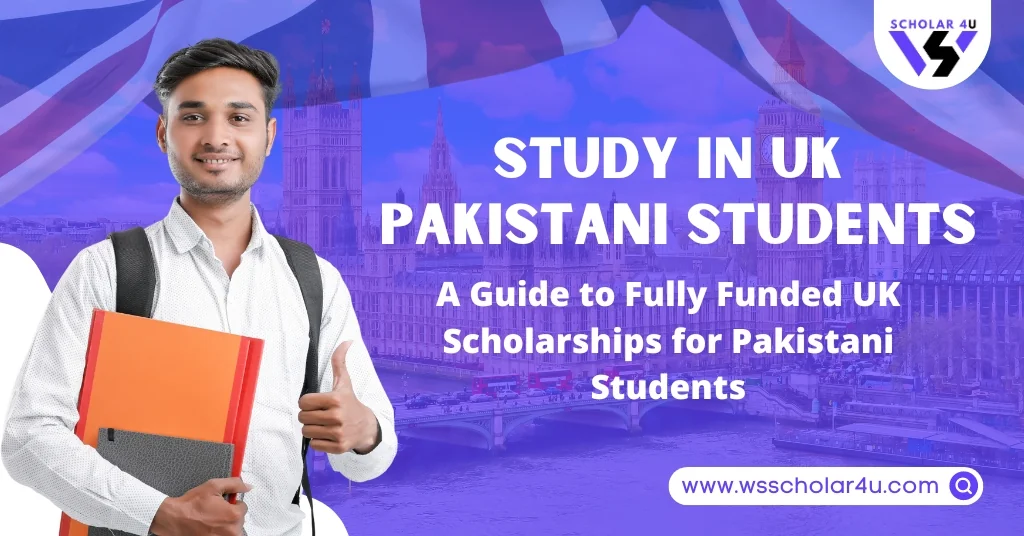
UK Scholarships for Pakistani Students 2027–28 give talented applicants opportunities to study in the United Kingdom with tuition support, living funding, travel assistance, or university-based awards. The strongest fully funded routes include Chevening, Commonwealth Scholarships, Gates Cambridge, Clarendon, Rhodes, and selected British Council programmes. Each scholarship has different degree levels, deadlines, nomination rules, and eligibility conditions.
Pakistani students commonly face 2 connected problems when applying to UK universities: the total cost of tuition and living in the UK can be unaffordable, and scholarship information is spread across government, university, and partner websites. A student may also mistake a tuition discount for a fully funded award or miss a nominator’s earlier deadline. This guide solves those problems by separating full-cost opportunities from partial awards and explaining the route, documents, and timeline for each major option.
This post is based on official scholarship pages and research-based financial-aid context. It is written to help Pakistani applicants identify the right degree level, compare benefits, prepare competitive documents, and apply through the correct portal. Since scholarship dates and university deadlines change, applicants must confirm the current call before submitting. The official sponsor’s rules always take priority over a summary article.
Top UK Scholarships for Pakistani Students 2027–28
The top active or announced UK scholarship opportunities for Pakistani students include Chevening Scholarships, Commonwealth Master’s Scholarships, Gates Cambridge Scholarships, Clarendon Scholarships at Oxford, Rhodes Scholarships for Pakistan, and British Council GREAT Scholarships. Chevening, Commonwealth, Gates Cambridge, Clarendon, and Rhodes are the strongest full-funding choices in this list. GREAT Scholarships are valuable but normally contribute £10,000 toward tuition rather than covering every cost, so applicants must plan additional funding.
1. Chevening Scholarship 2027–28
Chevening is the UK Government’s flagship international scholarship for outstanding emerging leaders. Pakistani applicants can apply for a one-year taught master’s degree in the UK. The Pakistan page states that applications for 2027–28 are open until 6 October 2026 at 11:00 UTC. Chevening normally covers tuition fees, approved economy travel, a living stipend, and specified allowances under its award terms.
Chevening suits applicants with leadership potential, professional experience, a clear career plan, and a commitment to return to or contribute to their home country. Applicants must select eligible one-year, full-time, UK-based taught master’s courses and complete the Chevening application before the deadline. The programme is highly competitive, so Pakistani students should begin preparing leadership examples, career goals, course choices, and references early.
2. Commonwealth Master’s Scholarships 2027–28
Commonwealth Master’s Scholarships support talented applicants from eligible low- and middle-income Commonwealth countries who could not otherwise afford postgraduate study in the UK. Pakistan is a Commonwealth country, but applicants must follow the current nomination route and satisfy the detailed academic, residence, financial-need, and documentation requirements. For the 2027–28 academic year, applications open on 8 September and close at 16:00 BST on 20 October, with study beginning in September or October 2027.
The award is designed around development impact. Applicants should connect the proposed master’s course with a development theme and explain how the knowledge will benefit Pakistan or wider communities. Applications are normally submitted through CSC Central and a nominator; the Commonwealth Scholarship Commission does not accept direct applications for this master’s route. Pakistani applicants should also check the Higher Education Commission or other official nominating body for a local deadline that may be earlier.
3. Gates Cambridge Scholarship 2027–28
The Gates Cambridge Scholarship funds outstanding postgraduate applicants from outside the United Kingdom who want to study at the University of Cambridge. The programme offers around 80 full-cost scholarships each year. Pakistani students may apply if they meet the eligibility rules and secure admission to an eligible Cambridge postgraduate course. Applications for 2027–28 are scheduled to open in September 2026, with deadlines depending on the course and applicant category.
Gates Cambridge assesses intellectual ability, reasons for choosing the course, commitment to improving the lives of others, and leadership potential. The funding package commonly covers the University Composition Fee, a maintenance allowance, economy airfare, visa or immigration health surcharge support, and possible additional funding under current terms. Applicants must complete the Cambridge course application and the Gates Cambridge funding section in the same admissions process.
4. Clarendon Scholarship at Oxford
The Clarendon Fund offers more than 200 new fully funded graduate scholarships each year at the University of Oxford. Pakistani applicants are eligible to be considered because Clarendon has no nationality, ordinary-residence, or field-of-study restrictions. The award covers course fees and provides a living-expense grant for the period of fee liability. Applicants are automatically considered when they apply for a new master’s or DPhil course by the relevant December or January course deadline.
Clarendon is an excellent option for Pakistani students who have outstanding academic records and a strong graduate-study plan. There is no separate Clarendon scholarship form. The applicant must submit a complete Oxford graduate application by the course funding deadline and indicate that they want to be considered for funding. Because deadlines vary by course, students should never wait for a general Oxford date.
5. Rhodes Scholarship for Pakistan
The Rhodes Scholarship is a fully funded postgraduate opportunity at the University of Oxford. The Rhodes Trust provides constituency-based application routes, including Pakistan. The official Pakistan page for the 2027 scholarship states that applications opened on 1 June 2026 and close at 23:59 PKT on 5 August 2026. Applicants should review the Pakistan constituency’s eligibility, selection criteria, documents, and course rules directly on the official Rhodes website.
Rhodes selection looks beyond grades. Candidates should demonstrate academic excellence, character, leadership, energy, commitment to service, and a clear purpose. The scholarship supports postgraduate study at Oxford and builds an international scholar community. Pakistani applicants should prepare their personal statement, activities, references, academic evidence, and course plan well before the constituency deadline.
6. British Council GREAT Scholarships
GREAT Scholarships are an important UK option for Pakistani students, but they are usually partially funded rather than fully funded. The British Council states that GREAT Scholarships provide £10,000 toward tuition fees for a wide range of one-year taught postgraduate courses. The programme includes Pakistan among its eligible countries, and participating universities publish their own courses, eligibility requirements, and deadlines.
GREAT is suitable for students who can pay the remaining tuition and living costs through savings, family support, a loan, work permitted under visa rules, or another award. The applicant applies to the participating UK university rather than using one universal central form. Pakistani students should check the country page and the selected university’s scholarship page for the current 2027–28 list.
Applicants can explore more options in the British Council scholarships in the UK guide. The guide can help students compare British Council programmes, but current eligibility and deadlines should always be checked on the British Council or university website.
Scholarship Summary
The UK scholarship landscape includes full-cost government awards, university-funded postgraduate scholarships, constituency-based awards, and partial tuition contributions. Pakistani applicants should first choose the degree level and funding need, then shortlist awards that match their academic record, leadership profile, subject, professional experience, and financial circumstances. The table below summarizes the top opportunities discussed above.
| Scholarship | Level | Host institution or route | Funding type | Key 2027–28 timing |
| Chevening | One-year taught master’s | UK universities; central Chevening application | Generally fully funded under award terms | Open until 6 October 2026, 11:00 UTC |
| Commonwealth Master’s | Full-time taught master’s | UK universities; CSC and nominator route | Generally fully funded | Opens 8 September; closes 20 October at 16:00 BST |
| Gates Cambridge | Eligible postgraduate courses | University of Cambridge | Full-cost scholarship | Opens September 2026; course-specific deadlines |
| Clarendon | Master’s and DPhil | University of Oxford | Fully funded graduate award | Relevant Oxford December or January course deadline |
| Rhodes Pakistan | Postgraduate study | University of Oxford; Pakistan constituency | Fully funded | 2027 Pakistan deadline: 5 August 2026 at 23:59 PKT |
| GREAT Scholarships | One-year taught postgraduate | Participating UK universities | £10,000 tuition contribution | University-specific; 2027–28 dates to verify |
| Women in STEM | One-year master’s | Participating UK universities | Full scholarship for eligible women in STEM | Check the latest Pakistan/South Asia call |
A “fully funded” label does not mean every scholarship has identical benefits. One award may cover tuition, living costs, travel, visa expenses, and health charges, while another may cover tuition and a maintenance allowance but not every personal expense. Read the award terms, university fee page, and visa-cost guidance before accepting an offer.
Scholarship Coverage
The best fully funded UK scholarships for Pakistani students usually cover tuition fees, living support, and travel or relocation costs, but the exact package depends on the programme. Chevening, Commonwealth, Gates Cambridge, Clarendon, Rhodes, and Women in STEM each publish separate terms. GREAT Scholarships are different because the official British Council description is a £10,000 tuition contribution, not a universal full-cost package.
Chevening typically includes tuition, approved economy travel, a living stipend, and additional allowances. Commonwealth awards are generally described by the British Council as covering tuition, airfare, and a living allowance, although applicants should read the specific award notice. Gates Cambridge is a full-cost award with a fee component and maintenance support, while Clarendon covers course fees and a living-expense grant. Rhodes provides full funding for the eligible Oxford postgraduate programme under its published terms.
The British Council Women in STEM programme is designed for eligible women from specified countries and fields. The Pakistan page describes full scholarships including tuition, living stipend, travel, visa costs, health coverage fees, and English-language support, with each scholarship worth at least £40,000 in the latest published cycle. The 2027–28 call must be checked separately because participating universities and courses can change.
Students should compare the total cost of attendance rather than only the scholarship headline. Prepare an estimated budget for tuition, accommodation, food, transport, visa, immigration health surcharge, flights, books, deposits, and personal costs. Mark which costs are confirmed by the sponsor and which remain uncertain. This approach prevents a student from accepting a partial award while believing it is fully funded.
Applicants who need a practical checklist can read the requirements for fully funded scholarships guide. Use it to organize passports, transcripts, degree certificates, references, personal statements, research proposals, language scores, and financial documents before the relevant scholarship portal opens.
Eligibility Criteria
Eligibility depends on the scholarship, but Pakistani applicants should check nationality, degree level, academic achievement, English-language ability, leadership or development impact, admission status, professional experience, and financial need. Meeting a country requirement does not guarantee selection. A student must satisfy the scholarship rules and the admission rules of the chosen UK university.
Academic qualifications
Chevening normally requires an undergraduate degree that enables the applicant to gain entry to a UK postgraduate programme. Commonwealth Master’s applicants must generally hold a first degree at least at upper-second-class standard, or a lower-second-class degree with a relevant postgraduate qualification, by the required date. Gates Cambridge, Clarendon, Rhodes, and university scholarships assess academic excellence at a highly competitive level.
Pakistani applicants should check how their Pakistani degree, CGPA, division, or percentage is assessed by the selected university. Do not rely on a generic conversion table. The university may ask for a transcript, degree certificate, grading scale, class ranking, or verification letter. Applicants whose final degree is pending should follow the official rule for expected graduation.
English-language requirement
UK universities set their own English-language requirements. A scholarship may allow an applicant to apply before receiving IELTS or another test score, but the university may require the score before issuing an unconditional offer. Chevening, Commonwealth, Gates Cambridge, Clarendon, Rhodes, and GREAT applicants should check the selected course page rather than assume that one test score applies to every institution.
Leadership and development potential
Chevening and Rhodes place strong emphasis on leadership, influence, character, service, and future impact. Commonwealth evaluates development potential and the relevance of study to development themes. Gates Cambridge considers the applicant’s commitment to improving the lives of others. A competitive Pakistani applicant should show evidence through work, research, community service, entrepreneurship, public service, professional achievement, or sustained volunteer activity.
Admission and course rules
Scholarship eligibility is separate from admission. Chevening applicants need eligible one-year taught master’s courses. Clarendon applicants must submit a new Oxford master’s or DPhil application by the course deadline. Gates Cambridge applicants must apply to an eligible Cambridge postgraduate course. Commonwealth applicants should identify an approved UK course and follow the nominator route. GREAT applicants apply through participating universities and their listed courses.
Financial need and return or impact expectations
Commonwealth is designed for candidates who could not otherwise afford UK study. Chevening expects scholars to return to their home country for a period under its conditions. Other scholarships may assess public service, leadership, or the potential to improve communities. Read the terms carefully before applying, especially if a student plans to remain in the UK after graduation or has existing funding.
Pakistani students seeking undergraduate funding should review UK undergraduate scholarships for international students. Many flagship awards in this guide are postgraduate scholarships, so undergraduate applicants need a separate search strategy and should check each university’s international funding pages.
Application Process
The most effective UK scholarship application process begins 9 to 12 months before enrolment. Pakistani applicants should choose the degree level, shortlist universities, identify scholarship deadlines, prepare documents, request references, complete English testing, and write a coherent personal statement or study plan. The application route may be central, nominator-based, university-based, or constituency-based.
Step 1: Select the correct scholarship category
Choose an award that matches the intended level. Chevening and Commonwealth Master’s are postgraduate routes. Gates Cambridge and Clarendon support postgraduate study. Rhodes is a postgraduate Oxford scholarship. GREAT usually supports one-year taught master’s tuition. British Council Women in STEM supports eligible women entering selected STEM master’s courses. Do not apply to a master’s scholarship with an undergraduate profile or assume that one form covers every programme.
Step 2: Research eligible courses
Shortlist 3 to 5 suitable UK courses based on academic content, career outcome, entry requirements, teaching format, location, and funding eligibility. Chevening applicants must choose eligible one-year taught courses. Gates Cambridge and Clarendon applicants must use eligible Cambridge or Oxford courses. Commonwealth applicants should connect the course with development themes. Confirm that the course begins in the required academic year.
Step 3: Prepare a document folder
Create a digital folder containing the passport, academic transcripts, degree certificates, grading scale, CV, English-language evidence, references, personal statement, research proposal if applicable, and proof of work or leadership. Use consistent spellings of the name and dates. Keep clean PDF copies and follow every portal’s file-size rules.
Step 4: Request strong references
Ask referees who can discuss academic ability, professional character, leadership, research potential, service, and future impact. Give them the scholarship description, course information, CV, and draft goals. Commonwealth requires references uploaded through its application system, while other programmes may send referees an online request. Request references early because late or incomplete references can make an application ineligible.
Step 5: Write a focused personal statement
A strong statement should connect the applicant’s past evidence, chosen UK course, scholarship mission, and future contribution to Pakistan. Avoid general claims such as “I am passionate about development” without proof. Explain the problem the applicant wants to address, what skills the UK course provides, why the university is appropriate, and how the applicant will apply the knowledge after graduation.
Step 6: Follow the correct application route
Chevening uses its own online application system. Commonwealth Master’s applicants apply through CSC Central and an approved nominator; direct applications are not accepted. Gates Cambridge is integrated with the Cambridge graduate application. Clarendon consideration is automatic when the Oxford application is submitted by the relevant deadline. Rhodes uses the Pakistan constituency route. GREAT applicants follow the participating university’s instructions.
Step 7: Track deadlines separately
Make a spreadsheet with scholarship name, portal, opening date, closing date, local nominator deadline, university application deadline, reference deadline, English-test deadline, and result date. This is essential because the Commonwealth nominator may close before CSC Central, Oxford and Cambridge courses use different deadlines, and Rhodes uses a Pakistan constituency deadline.
Step 8: Submit and save evidence
Proofread every section and submit before the portal closes. Save the application reference, confirmation email, uploaded documents, and payment or submission record if any. Do not wait until the final hour. Portals can become busy, documents can fail to upload, and a time-zone error can make an application late.
Step 9: Prepare for interviews or university follow-up
Chevening, Rhodes, university scholarships, and other programmes may invite shortlisted candidates to an interview or request additional documents. Review the scholarship mission, course choice, leadership examples, development goals, and return or impact plan. Answer with specific evidence rather than memorized slogans.
Step 10: Verify the final offer
Read the scholarship award letter and university offer together. Confirm the tuition amount, maintenance payment, accommodation, travel, visa support, dependants policy, start date, academic conditions, and renewal rules. A fully funded award may still require the student to pay a deposit temporarily or cover personal costs not listed in the award.
Students interested in Oxford graduate funding can read the Clarendon Scholarship at the University of Oxford guide. Use the official Oxford page for the final course deadline and automatic-consideration rules because Clarendon deadlines are linked to the selected programme.
Deadline
The main confirmed 2027–28 deadlines for Pakistani applicants include 6 October 2026 at 11:00 UTC for Chevening, 20 October 2026 at 16:00 BST for Commonwealth Master’s applications, and 5 August 2026 at 23:59 PKT for the Rhodes Scholarship Pakistan constituency. Gates Cambridge, Clarendon, GREAT, and university-based awards use course- or institution-specific deadlines.
| Scholarship | Published timing |
| Chevening Pakistan | 6 October 2026, 11:00 UTC |
| Commonwealth Master’s 2027–28 | 20 October, 16:00 BST; applications open 8 September |
| Rhodes Pakistan 2027 | 5 August 2026, 23:59 PKT |
| Gates Cambridge 2027–28 | Opens September 2026; course-specific deadline |
| Clarendon Oxford | Relevant Oxford December or January course deadline |
| GREAT Scholarships | University-specific deadlines |
| Women in STEM | University- and cycle-specific; verify latest Pakistan/South Asia call |
Applicants should verify dates immediately before applying because a scholarship page may update its cycle, course list, or local nomination process. A Pakistan-based nominator can set an earlier closing date than the international programme. The safest approach is to finish at least 7 days before the earliest applicable deadline.
Apply Now
Begin with the official Chevening Pakistan page, the Commonwealth Master’s Scholarships page, the Gates Cambridge programme page, the Oxford Clarendon page, and the Rhodes Pakistan page. Use the scholarship-specific portal rather than an unofficial agent or copied deadline list.
Before submitting, confirm 8 items: the scholarship is open to Pakistani applicants; the degree level matches; the selected course is eligible; the university application is complete; the references are submitted; the required English evidence is ready; the personal statement or study plan explains future impact; and the final deadline is confirmed in the official call.
Applicants can also review the Gates Cambridge Scholarship guide and the Commonwealth Scholarship guide for additional preparation support. The official university, government, British Council, or scholarship foundation page remains the final authority for the application form, course eligibility, funding terms, and deadline.
Related Scholarships
Related Scholarships
 UK
UKMarshall Scholarship 2027: Eligibility, Benefits, Application Process, Deadlines, and Complete Guide
 Countries
10 Best Educational Grants and Scholarships for Global Students 2027
 Countries
7 Top Scholarships for College to Achieve Success in 2027
 Countries
Amber Scholarship Program 2026-27: Eligibility, Deadline and Application Guide
 Scholarships in North America
Top 12 Scholarships for Higher Education Students 2027 Complete Guide
 Masters Scholarships
GREAT Scholarships 2027-28: £10,000 for a UK Master’s — Eligibility, Deadlines & How to Apply

